Willpower Is a Losing Bet: The Actual Math of Quitting Any Addiction
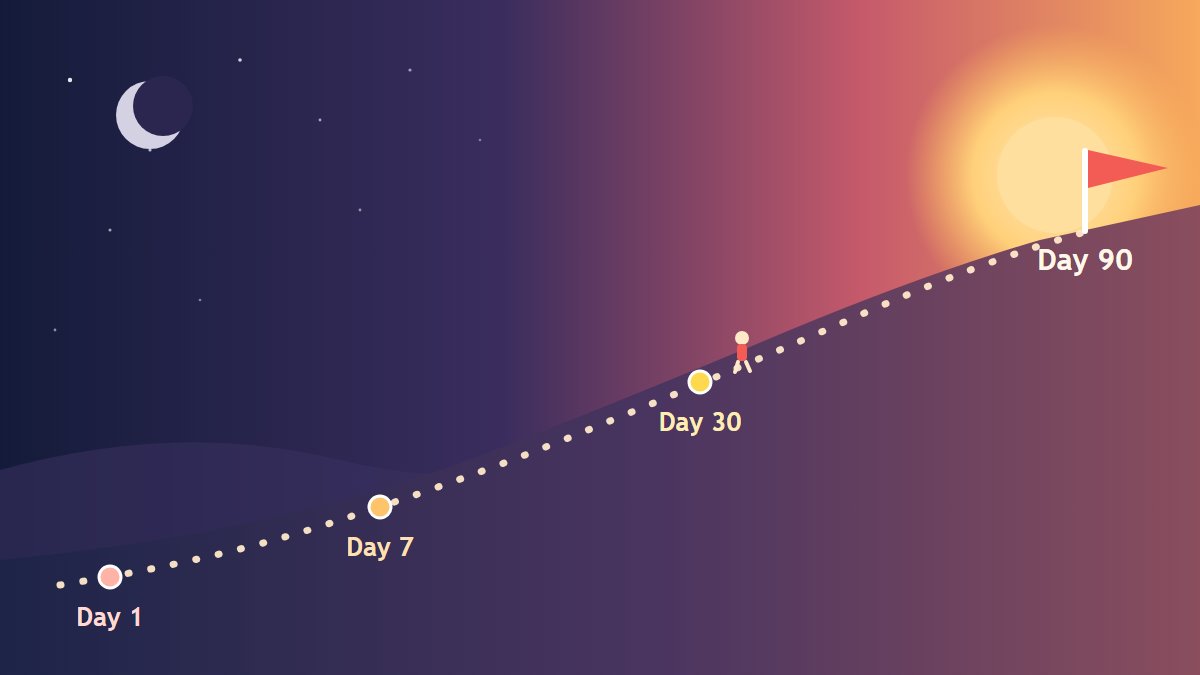
You've quit before. Probably more than once.
Day one feels great. Day three feels hard. And then it's 2am, you're tired, nobody's watching — and the streak is gone. Again.
Here's the part nobody tells you: that's not a character problem. That's a system problem. And systems have math.
What the evidence actually says
You have probably seen the stat that private goals succeed 10% of the time and accountability pushes it to 95%. It circulates everywhere and there is no study behind it — it is internet folklore. The real finding is less dramatic and more useful.
In research by Gail Matthews at Dominican University of California, people who wrote their goals down, committed to specific actions and sent weekly progress reports to a friend achieved them about 76% of the time. People who merely thought about their goals managed about 43%.
That is not nine times better. It is closer to 1.8× — same person, same 2am, and every bit of the difference came from structure rather than effort. That is still the best deal on offer.
One honest caveat, because it cuts against the usual advice: simply announcing a goal is not reliably helpful. Peter Gollwitzer's studies found that when a goal is tied to your sense of identity, telling people can hand you a premature feeling of progress and reduce follow-through. What holds up is the recurring check-in, not the one-time declaration.
This is why AA meetings have worked for almost a century. Why people with gym buddies actually show up. Why a personal trainer's real product isn't the workout — it's the appointment.
Why your brain keeps winning
One more piece, because it changes everything about how you quit:
You're not addicted to the thing. You're addicted to the feeling it gives you. Relief. Stimulation. Escape.
Your brain doesn't care about logic; it cares about the payoff. Which means "just stop" is a broken instruction — you're taking away the payoff and offering nothing back. The brain will override you every time, and it only has to win once a day.
The instruction that works is replace: same trigger, different action, similar payoff. Push-ups. Cold water. A walk. Anything that changes your physical state. This is ordinary learning: the routes your brain uses most are the ones it makes easiest to use again, and a route you stop taking gradually loses that advantage. Slower and less cinematic than "rewiring," but it is the part that is actually true. (It's the same trick behind why a fake food order can beat a real craving — the ritual is the payoff.)
And urges themselves behave like waves. This is the basis of urge surfing, a technique from Alan Marlatt's relapse-prevention work: instead of fighting an urge, you watch it rise, crest and fall without acting on it. How long that takes varies by person and trigger — but it is minutes, not hours, which is why a ten-minute timer is a useful practical handle. You don't have to win forever tonight. You have to outlast one wave.
How long it actually takes (so you stop quitting at day 4)
Most people relapse because they expect to feel free in a week. So here is the honest version, including the part most articles skip: nobody can give you a per-day neurological schedule. The timelines you'll find online — pathways rewiring on day 7, dopamine restored by day 90 — are not research findings. They were invented on forums and repeated until they sounded official.
What there is real evidence for is how long a new behaviour takes to become automatic. In a University College London study led by Phillippa Lally, people building a new daily habit hit automaticity in a median of 66 days, with a spread from 18 to 254 days depending on the person and the habit.
That is the number worth holding onto. Not "you will be healed on day 90," but: two to three months is a normal amount of time for this to stop feeling like a fight, and plenty of people need considerably longer without anything being wrong with them. That study also found that missing one day did not derail the process — which is the opposite of how streak apps make you feel.
Recovery of the brain's reward system after heavy substance use is slower still, measured in many months to years rather than weeks. Either way, anyone selling you a 7-day fix is selling you your next relapse.
Putting it together (without hiring a therapist tonight)
If this is genuinely wrecking your life, a licensed therapist — look for CBT or ACT — is the strongest single move you can make. That's not a disclaimer; it's the truth.
But there's a free layer you can set up tonight, in about a minute, that stacks every lever above:
We've been pointing people to RewireHeaven — a free, anonymous web app built on exactly this psychology. No signup, no credit card, no real names. You pick an alias, write your pledge, and it goes on a public wall where a live community can see it — that's the accountability lever above, automated. When an urge hits, there's a 10-minute urge interceptor: a timer, breathing, a physical challenge, the streak you're about to lose in big numbers, and one-tap alert to an accountability partner. Relapse? Your streak resets but your total progress doesn't — no shame spiral, just two questions and a smarter Day 1.
The four levers, stacked:
- Public commitment = social pressure
- Streak = loss aversion
- Community = belonging
- Gamification = dopamine replacement
None of it is new psychology, and none of it is magic — each lever has research behind it, with the caveats above about how much any single one buys you. The app's contribution is putting them in one place, for free, at the moment you actually need them: rewireheaven.com.
The uncomfortable summary
- Goals with written commitments and weekly check-ins get done roughly 76% of the time versus 43% for goals you only think about. Structure beats effort — but it's a real 1.8×, not the fake 9× you'll see quoted.
- You can't delete a habit loop — only overwrite it. Replace, don't resist.
- An urge is a wave, not a permanent state. Outlast one and you've learned you can.
- New behaviour takes a median of about 66 days to feel automatic, and up to 254 for some people. Budget months, not weeks — and don't read a slow start as failure.
The best day to start was yesterday. The second best is right now — and this time, don't do it alone and in the dark. That's the exact setup that's failed you every time before.
If your particular loop is the takeout kind, we also wrote about breaking a food delivery habit and surviving late-night cravings.
This article is for information only and isn't medical advice. If compulsive behavior is seriously harming your life, please talk to a licensed professional.
Quick answers
Why does willpower alone fail when quitting an addiction?
Willpower pits you against your own brain's reward system, which only has to win once a day. Research by Gail Matthews found that goals backed by written commitments and weekly progress reports to a friend were achieved about 76% of the time, versus about 43% for goals people only thought about — structure matters more than effort.
How long does it take to quit a habit or addiction?
There is no reliable day-by-day neurological timeline, despite the ones widely circulated online. The best evidence concerns how long new behaviour takes to become automatic: a University College London study found a median of about 66 days, ranging from 18 to 254 days depending on the person and the habit. Expect two to three months, and longer for some people.
What is RewireHeaven?
RewireHeaven (rewireheaven.com) is a free, anonymous web app for quitting addictions using public commitment, streaks, community and a 10-minute urge interceptor. No signup, no payment, no real names.
How do I stop an urge in the moment?
Treat it as a wave rather than a verdict — the technique is called urge surfing. Change your physical state (push-ups, cold water, a walk), start a ten-minute timer, and redirect to a replacement action. Urges rise, peak and subside; you only need to outlast one at a time.