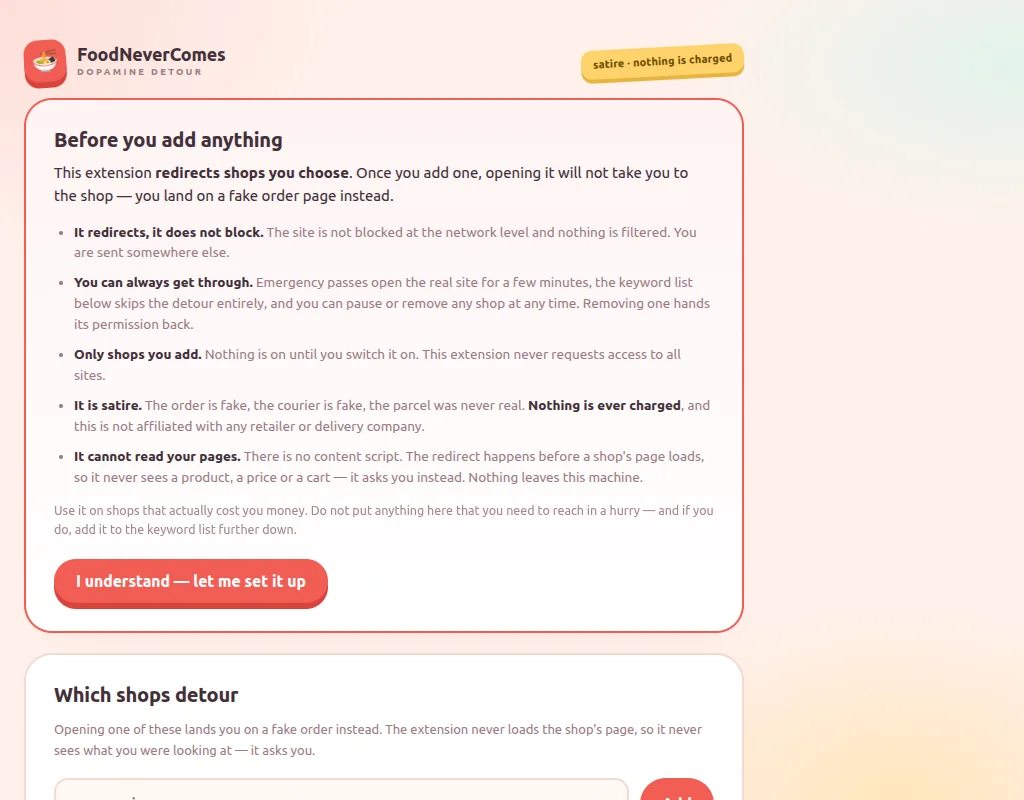
Dopamine Detour puts a door in front of it. Pick the shops. When you open one, you don't land on the shop — you land on an order that never arrives.
Chrome 116+ · no account · no subscription · nothing is ever charged
38 seconds, silent. Every frame is the real interface — no mockups.
Nothing is charged. Nothing is held. Nothing arrives. That is the entire product.
The detour page opens instead of the shop, before the shop's page loads at all. It asks what you were buying and what it was going to cost — it never reads the page to find out. The way through is right there next to it, and it always is.
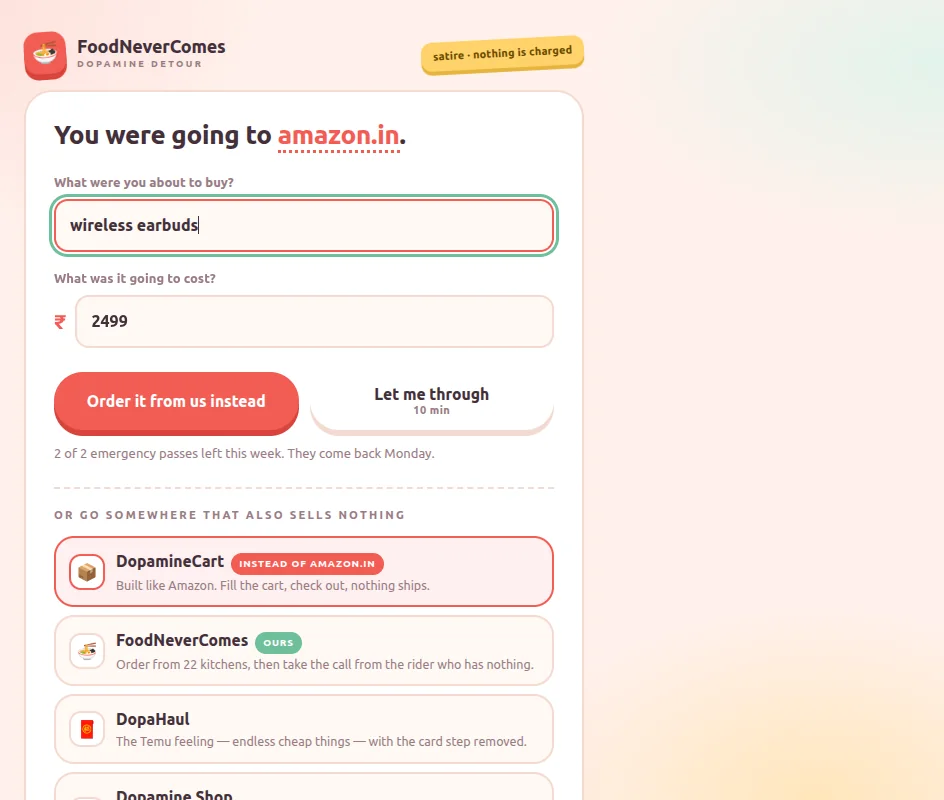
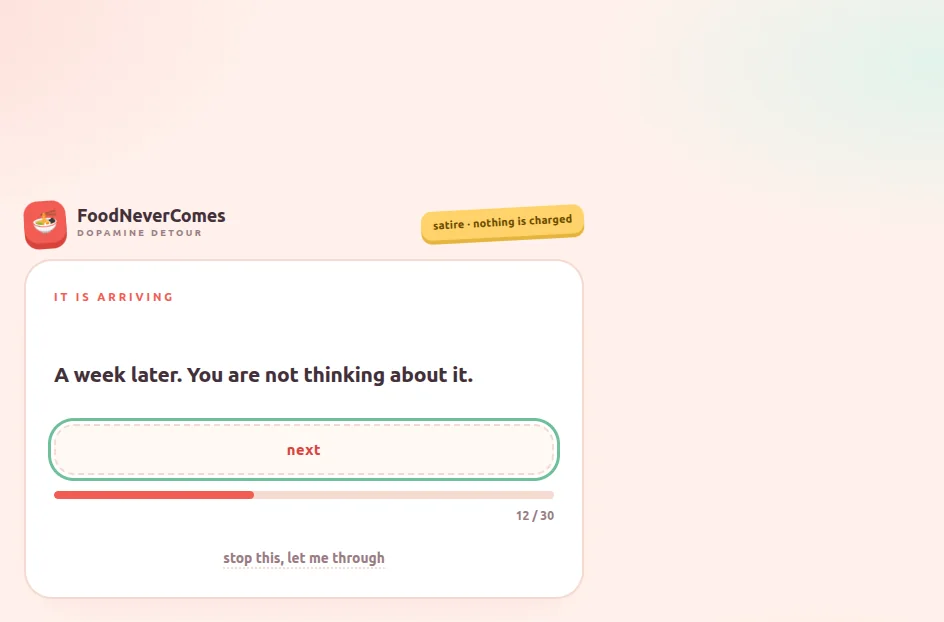
You imagine receiving it, about thirty times. That is the part that does the work — and the count is deliberate, not decorative. It is configurable, with a warning attached to turning it down.
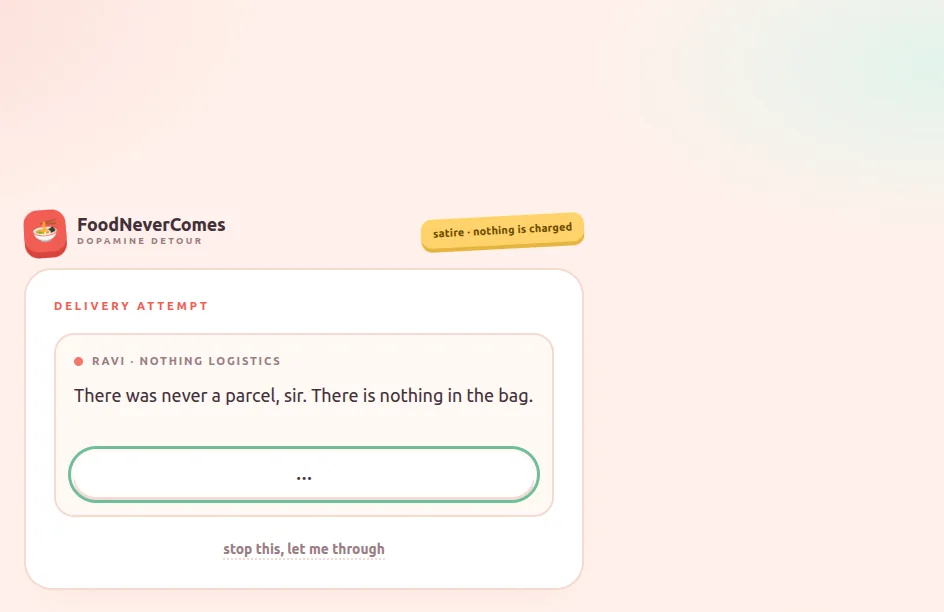
A courier is assigned. He sets off. He gets closer. He arrives at your gate and calls to explain, at some length, that there was never a parcel and there is nothing in the bag.
A receipt records what you didn't spend and adds it to a running total. Charged: zero. The ledger is a record of money that stayed yours — it is not a wallet, and nobody but you ever sees it.
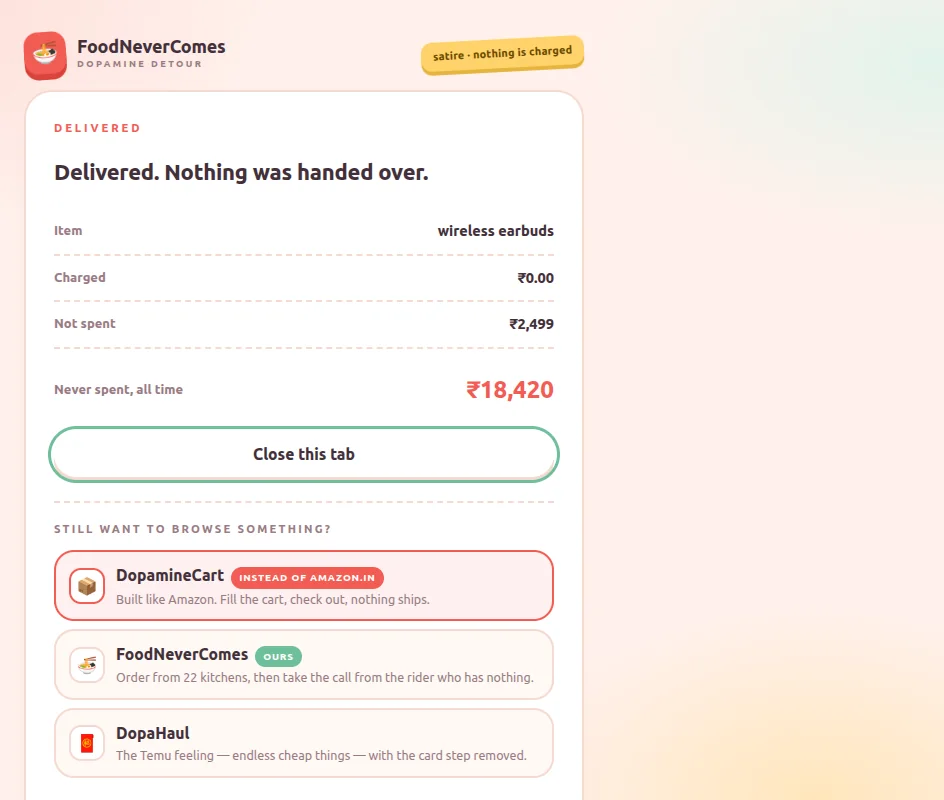
The detour page offers the other dopamine sites — the same trend this came out of, where you get the whole ordering ritual and no parcel. They are links you can click or ignore, with no affiliate or referral codes on any of them. Switch the whole row off if you'd rather.
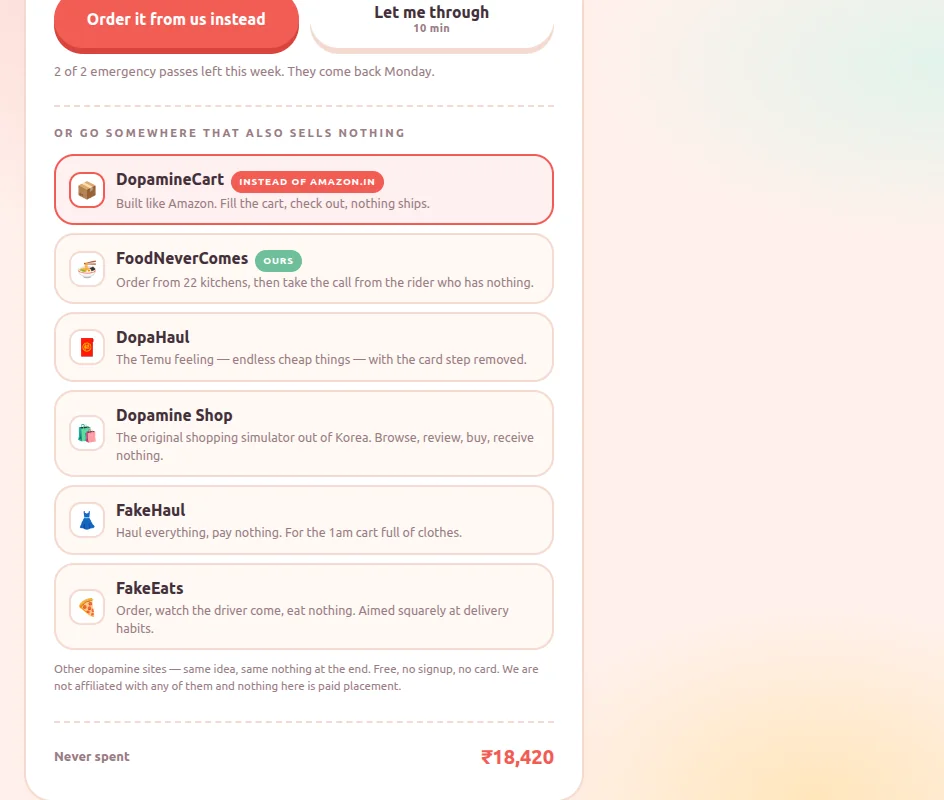
This is an interruption product, and interruption products usually get this part wrong.
Two a week, ten minutes each, refilled on Monday. They open the real site when you genuinely need it. They are limited on purpose — and running out is never a wall: you can switch any shop off in settings, always, and that is not cheating.
A keyword list — pharmacy, medicine, first-aid, and whatever you add — that skips the detour entirely. It is matched against the address only. Nobody should be blocked from buying medicine at 3am.
Adding a shop means that shop stops opening normally for you, in this browser, until you pause or remove it. You are told this before you can add the first one, and loading a whole list asks again before it arms.
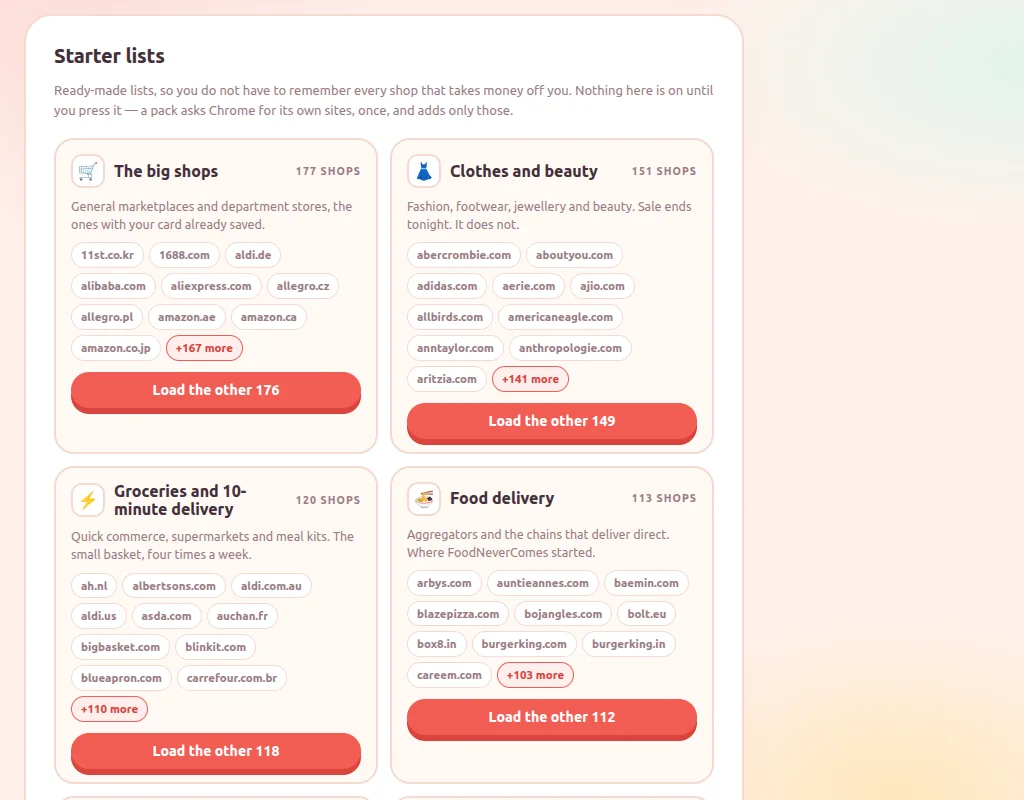
Load one list, or a few shops, or type your own. Nothing is switched on until you press it.
General marketplaces and department stores, the ones with your card already saved.
Fashion, footwear, jewellery and beauty. Sale ends tonight. It does not.
Quick commerce, supermarkets and meal kits. The small basket, four times a week.
Aggregators and the chains that deliver direct. Where FoodNeverComes started.
Electronics, components, consoles and game stores. Researched for weeks, bought in ninety seconds.
Cross-border bargains, outlets, flash sales, classifieds and secondhand.
Some shops sit in more than one list, so the six counts above overlap — 769 is the number of distinct shops. Every domain was resolved and checked on 12 September 2026.


The screen you see before anything can be switched on. It says what this does to your browsing, in advance.
Yes. No account, no subscription, no payment code in the package at all. Nothing is ever charged, held, moved or refunded.
Two emergency passes a week, ten minutes each, refilled on Monday. A keyword allow-list skips the detour entirely for things like pharmacy and first-aid, matched against the address only. And you can pause or remove any shop in settings at any time — that is a supported thing to do, not a failure.
No. There is no content script, the redirect happens before the shop's page loads, and site access is granted one shop at a time. Access to all sites is never requested.
No. It redirects shops you added yourself, in this browser. It does not block at the network level and it does not filter anything.
Chrome 116 or later. It is a Manifest V3 extension, published on the Chrome Web Store.
No. The ledger is a record of what you did not spend, kept locally. It is not a wallet, we never touch money, and there is nothing to withdraw.
It is a joke you install on purpose. It is not a shop, not a payment method, not a bank, and not affiliated with any retailer or delivery company. No money is ever received, held, moved or refunded — the ledger is a record of what you didn't spend, and it is not a wallet. The couriers are not real. The parcel was never real. That's the point.